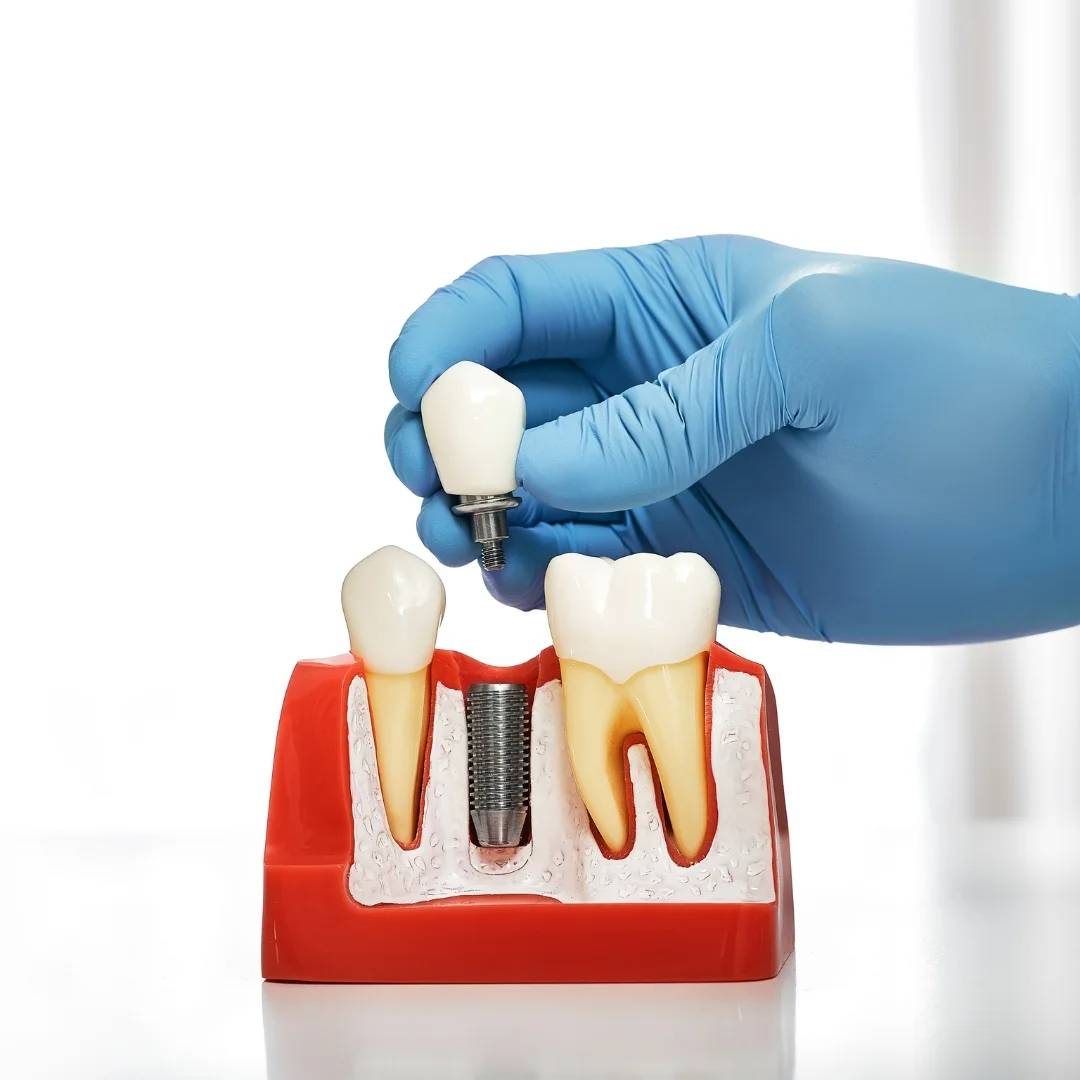
Quick Answer: A surgical guide is a custom template, usually 3D printed, that fits over your teeth or gums and directs the drill to a position planned in advance on 3D scans. Because the plan is made digitally before surgery, a surgical guide helps the dentist place each implant at the intended angle, depth and location. Published reviews support this approach as a reliable way to improve placement accuracy.
A dental implant only works well when it sits in the right spot. Even a small tilt can affect how the crown looks, how your bite meets and how easily you can clean around it. That is why surgical guides for implants have become one of the most studied developments in modern implant dentistry. If you have searched “surgical guide implant” while weighing your options in London, ON, this article explains what the tool is, how it works and what the published research actually says.
What Is a Surgical Guide for Implants?
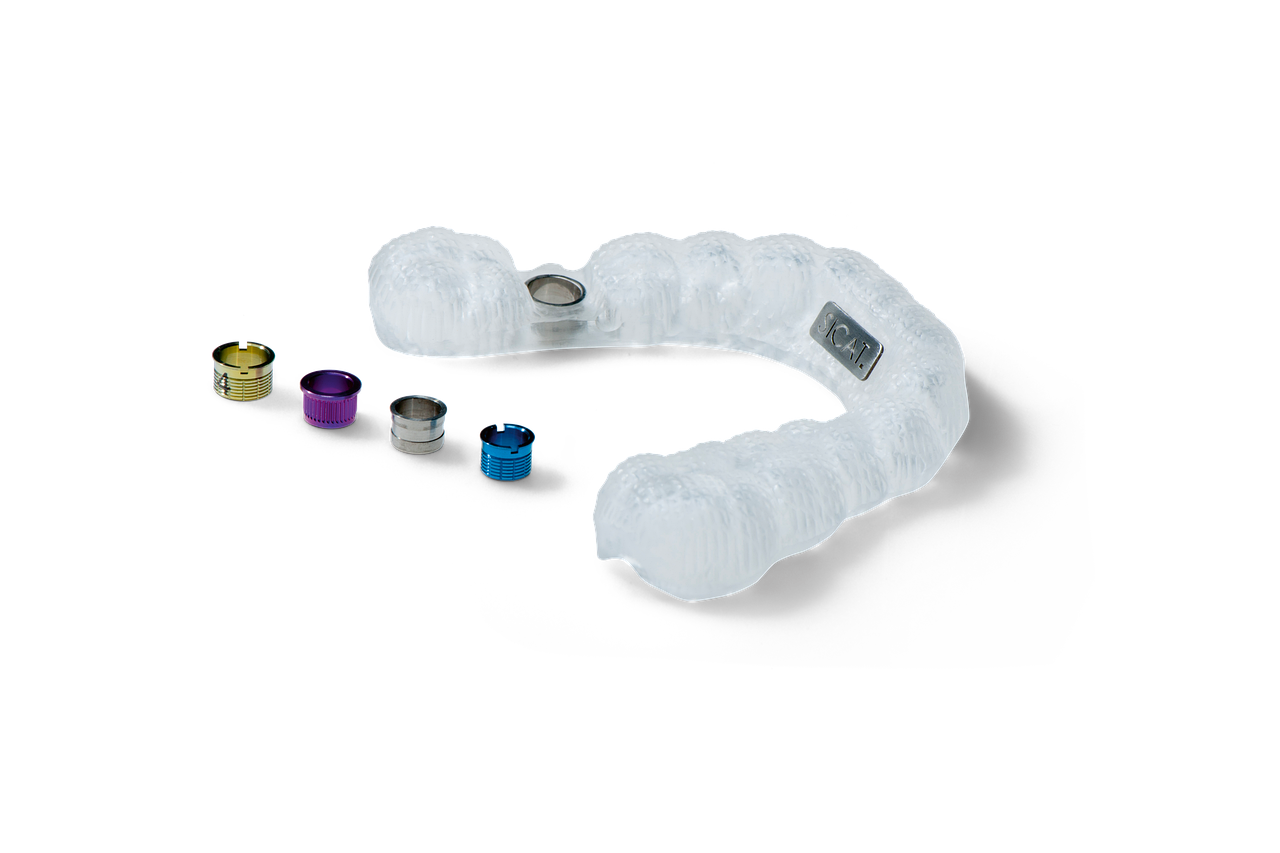
A surgical guide is a precise template that transfers a digital implant plan into your mouth. It looks a little like a clear mouthguard with small openings, often lined with metal sleeves. Each sleeve marks exactly where an implant should go.
The guide rests on your remaining teeth, on your gum tissue or, in some cases, directly on bone. During surgery, the drill passes through the sleeve. As a result, the sleeve limits the drill’s angle and depth to match the plan.
Freehand placement, by contrast, relies on the surgeon’s eye, experience and landmarks visible during the procedure. Skilled dentists place implants freehand every day. However, a guide adds a physical link between the plan and the surgery itself.
How Surgical Guides Improve Implant Accuracy
The short answer is planning. A guide moves the important decisions from the operating chair to the computer screen, where the dentist can study your anatomy in three dimensions before anything happens.
Specifically, the planning software lets the dentist see bone height and width, the position of nerves and sinuses, and the space available for the future crown. The dentist can then test different implant sizes and angles virtually. Consequently, the final position is chosen with far more information than a two-dimensional X-ray provides.
According to a review on the current state of computer-guided implant surgery published in Periodontology 2000, virtual implant planning allows for a prosthetically driven approach. In plain terms, the dentist designs the tooth first and then places the implant where it best supports that tooth. The same review links this approach to better prosthesis design, better esthetics and optimized function.
Static Guides Versus Dynamic Navigation
The physical template described above is called static computer-aided implant surgery. A newer alternative, dynamic navigation, uses camera tracking to show the drill’s position on a monitor in real time. In addition, augmented reality systems now project the plan into the surgeon’s field of view.
Researchers have compared these methods directly. Systematic reviews of dynamic navigation, for instance, have measured its accuracy against both static guides and freehand placement. Both guided methods rest on the same principle, though: careful 3D planning before the first incision.
The Digital Workflow Behind a Guided Implant
A guided implant case usually follows a predictable sequence. Here is how the steps typically fit together.
- 3D imaging: A cone beam CT scan captures the bone, nerves and sinuses in three dimensions.
- Digital impression: An intraoral scan or a model records your teeth and gums in fine detail.
- Virtual planning: Software merges both data sets, and the dentist positions each implant on screen.
- Guide fabrication: The approved plan is converted into a template, often 3D printed, with sleeves at each site.
- Guided surgery: The guide is seated, checked for fit, and used to direct drilling and placement.
Each step depends on the one before it. Therefore, a small error in scanning or fit can carry through to the final result. This is why the guide is always checked carefully before surgery begins.
What the Research Says About Surgical Guides for Implants
The evidence base here is broad and still growing. Researchers have published several systematic reviews and meta-analyses on guided implant accuracy over the past decade.
A systematic review and meta-analysis in the Journal of Prosthodontic Research examined the accuracy of computer-guided surgery in partially edentulous patients. Notably, the authors also investigated which factors influence that accuracy. Their work reflects an important point: guides improve predictability, yet the outcome still depends on how each case is planned and supported.
Several factors can affect how closely the final implant matches the plan:
- How the guide is supported (teeth, gums or bone)
- Whether the guide fully directs drilling and implant insertion, or only the first drill
- The quality of the scans and how well they are merged
- How far the patient can open their mouth, especially for back teeth
In other words, a guide is not a guarantee. Rather, it is a tool that narrows the margin for error when the planning and execution are done well.
Is Guided Implant Surgery Right for Every Patient?
Not always. A guide offers the most value when the anatomy is tight, when several implants must line up for a bridge or denture, or when the implant sits in a highly visible area.
On the other hand, a straightforward single implant with generous bone may not need one. Similarly, someone with limited jaw opening may find a guide difficult to use on molars. Your dentist weighs these details during your consultation.
Timing matters too. A review in Periodontology 2000 on implant placement after extraction in esthetic sites notes that the dental community now focuses increasingly on long-term esthetic outcomes. Precise planning, whether guided or freehand, supports that goal.
Planning Dental Implants in London, ON
At Northwest Family Dental, on Hyde Park Road in London, ON, implant care is part of a wider range of services delivered under one roof. The team offers dental implants along with X-rays and digital imaging, bone grafting, tooth extractions and implant-supported dentures. Furthermore, IV sedation, oral sedation and nitrous oxide are available for patients who feel anxious about surgery.
That matters for implant planning. Because the steps happen in one familiar office, you avoid travelling between clinics for imaging, grafting and placement. Additionally, the dentists take time to walk you through your scans and explain why they recommend a particular approach.
If you are curious whether surgical guides for implants suit your situation, bring that question to your consultation. The Canadian Dental Association’s overview of dental implants is also a helpful primer before your visit.
Frequently Asked Questions
What is a surgical guide for dental implants?
It is a custom template that fits over your teeth or gums. It directs the drill to a position the dentist planned in advance using 3D scans of your jaw.
Does a surgical guide make implant surgery more accurate?
Published systematic reviews support computer-guided surgery as a way to improve placement accuracy. However, results still depend on scan quality, guide support and careful planning.
Is guided implant surgery more painful?
No. A guide does not add discomfort on its own. Local anesthetic is used for implant surgery, and sedation options are available at Northwest Family Dental for anxious patients.
Does every implant need a surgical guide?
Not necessarily. Simple cases with ample bone are often placed freehand. Your dentist decides based on your anatomy, the number of implants and the final restoration.
Book Your Implant Consultation
Precise implants start with a careful plan. If you are missing a tooth or considering implants, the dental team at Northwest Family Dental would be glad to review your options. Evening hours on Mondays and Wednesdays, plus two Saturdays a month, make it easier to fit a visit into a busy week. Contact our London, ON office to book your consultation today.
Sources & References
- Current state of the art of computer-guided implant surgery (Periodontol 2000, 2017)
- The accuracy of implant placement with computer-guided surgery in partially edentulous patients and possible influencing factors (J Prosthodont Res, 2022)
- Implant placement post extraction in esthetic single tooth sites: when immediate, when early, when late? (Periodontol 2000, 2017)
- Canadian Dental Association: Dental Implants